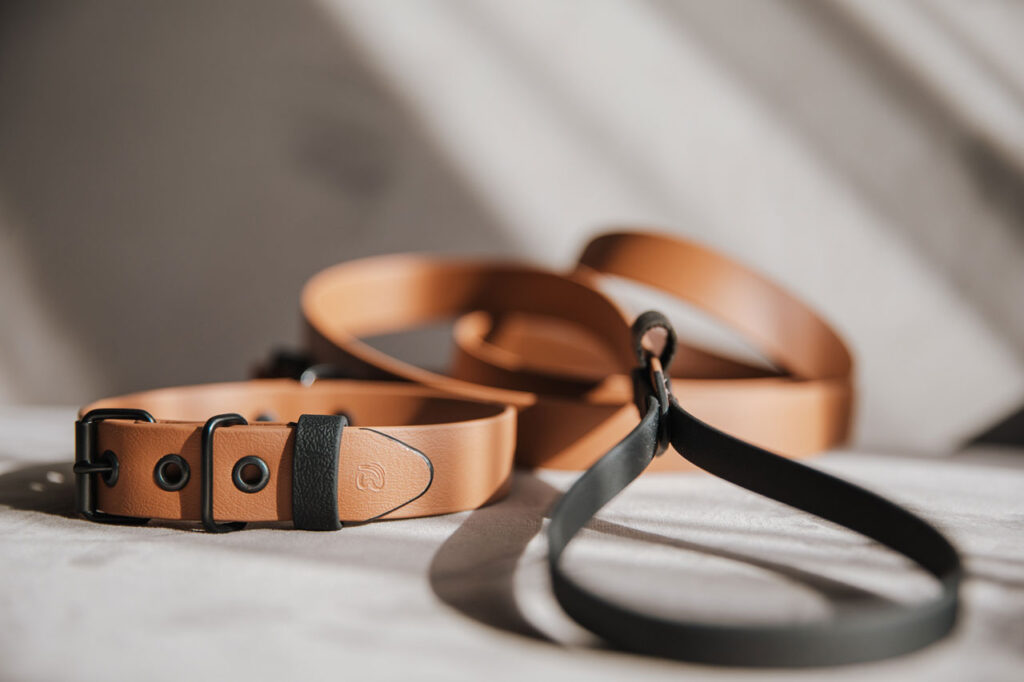
There is a huge variety of pet product manufacturers and individual makers in the market that ordinary person simply gets lost in their abundance. How and what to choose to make it the most appropriate and safest option for both the dog and the owner?
COLLAR. With the first collar a puppy usually gets acquainted at the kennel. His very first collar becomes a strip that is placed on his neck after the birth. The strips are multicolored to mark each puppy individually. Still at the kennel puppies are being gradually introduced to the collars which are adapted for little ones.
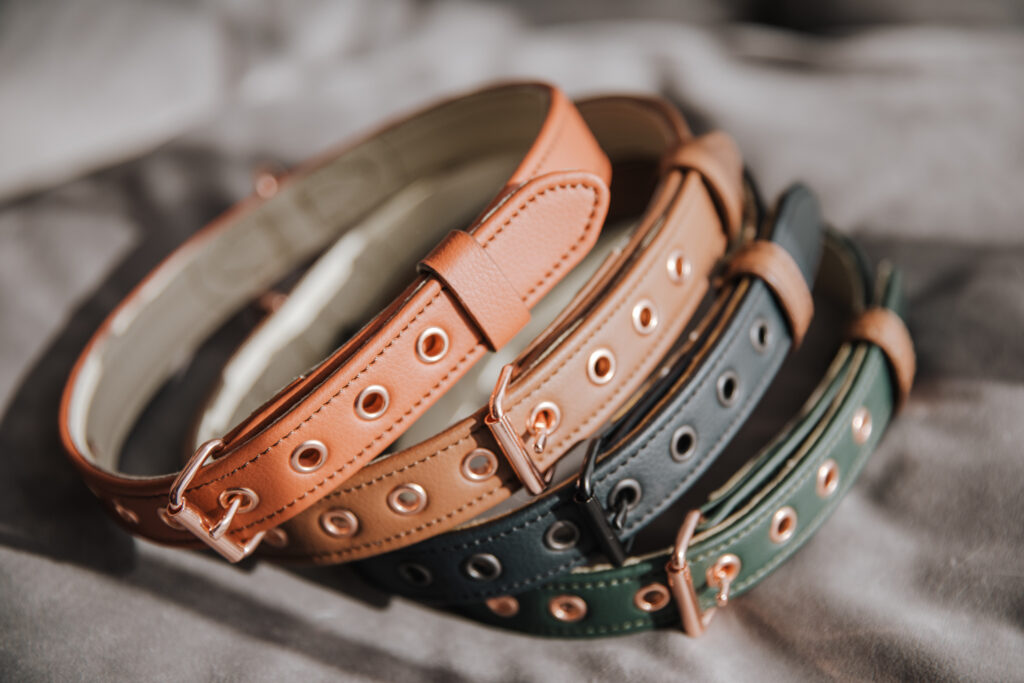
The collar has to be comfortable, made of high-quality materials, and used properly. It is important to make sure the collar is neither too tight nor too loose. It should fit from one to two fingers of the owner, pushing them in fairly firmly so that the pressure around the dog’s neck is evenly distributed. If the collar is too loose the dog will wriggle out. Slightly wider collars are safer as it distributes tensile force better and causes less damage to the trachea.
Neither too thin nor too thick collars are recommended unless the dog’s neck is particularly sensitive (for racing dogs and similar breeds), then tailored collars are needed.
The dog has to get used to the collar gradually when leading outside, being at home, and taking off at night (while getting used to it). Afterward, the collar should be put on before leading outside and removed once returned back home for the dog’s convenience and safety.
The collar buckle – is the comfort and safety of the owner. Pay great attention to the buckle – make sure it is safe, does not unlock from the impact force, and check if it is made of high quality.
The collar should not be just an accessory as it is also part of the training. The collar and leash are what ensure the safety of your dog therefore make sure to choose only reliable manufacturers and high-quality materials (high-quality leather, biothane, etc.).
When choosing a collar, pay attention to size charts as different manufacturers have different When choosing a collar, pay attention to size charts as different manufacturers have different size standards therefore it is very important to measure the range of your pet’s neck correctly. If you order the collar individually – additional information is important: pet breed, age, weight, character.

LEASH. Pay attention to leash connectors, what threads are used on connections, and what kind of carbine is used. Make sure it is comfortable to hold the leash firmly in your hand as it should not cut or hurt your hands. One of the most comfortable – rubberized leashes with rounded edges.
An automatic „flexi“ leash encourages the dog to constantly pull and draw, basically with this type of leash the dog is not being introduced to its limits. In stressful situations, suddenly pulling „flexi” leash and the dog closer is kind of a dramatic challenge as this type of leash can injure or even frighten the dog. When the leash falls and wraps, a very unpleasant sound is emitted which might scare sensitive pets.
„Flexi“ leash is more recommended for professionals or trainers who have many years of experience and knowledge in working with dogs.
The leashes fastened to the waist are perfect for running, cross-country running as well as for shopping, and walking with a cup of coffee to keep both hands free.
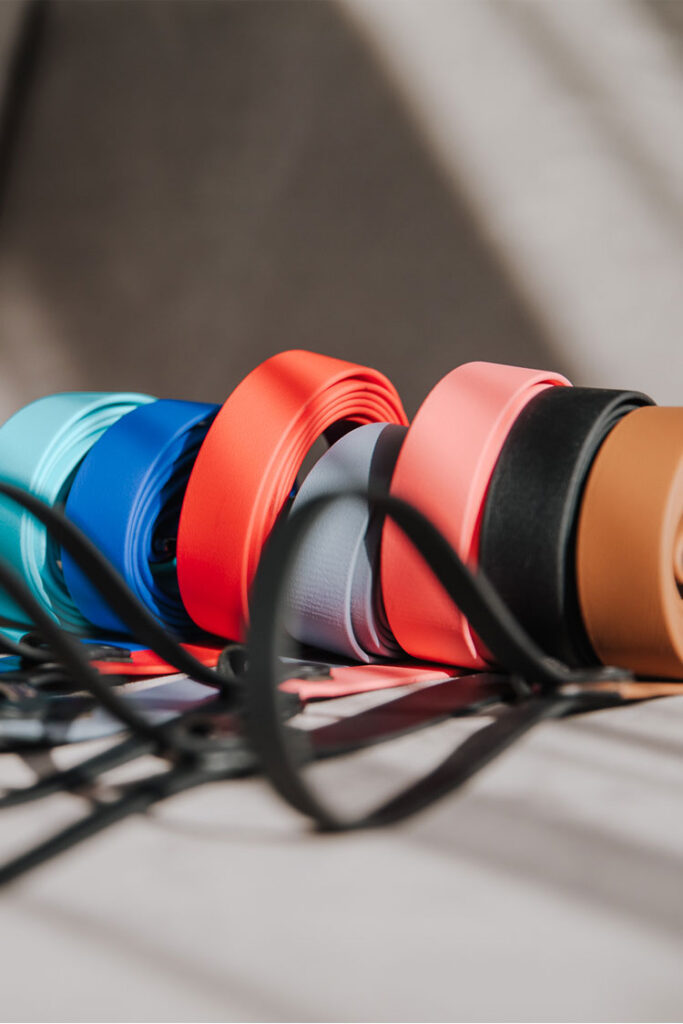
The safest leash is around two meters long which has a safe carbine, does not injure your hands, and is made of high quality and durable materials such as tarpaulin, genuine leather, hexa or multi-functional rubber leashes. Pay great attention to its materials, their quality, stitches, snap hooks and fasteners.
HARNESS. What’s “trending” now isn’t always the best choice. Harnesses are used when there are major problems with the trachea or during special workouts with stretching elements, special sports, or activities.
In everyday life, the most comfortable harnesses are Y-shaped which do not restrict shoulder movements and do not stick to the armpits. However, studies show that with all types of harnesses, especially those designed to prevent the dog from pulling, the angle of straightening of the dog’s shoulder is significantly limited, and the stride length is shortened leading to various dog orthopedic diseases and can negatively influence back’s growth.
It is recommended to consider carefully before choosing harnesses for casual, everyday walks. If the dog really pulls and tugs the best option is to go to a training school where you will get all the information and tips which are going to improve your and your pet’s lives without harming its health.
Choose collars and leashes from reliable manufacturers. The ideal variant – is personal contact with the manufacturer or company which will select and tailor them responsibly for you and your dog according to its individual characteristics. Never save on a quality collar and leash – better to have one more expensive, durable, and secure than a few inexpensive ones from a regular mall or the country of cheap accessories.